It’s Not Makeup
Scars Like a Bristlecone, and the Friend Who Became the Wind

I’m posting this in the days before Beltane — the old fire festival, the full arrival of spring, a day for celebrating what made it through the dark. It feels like the right time.
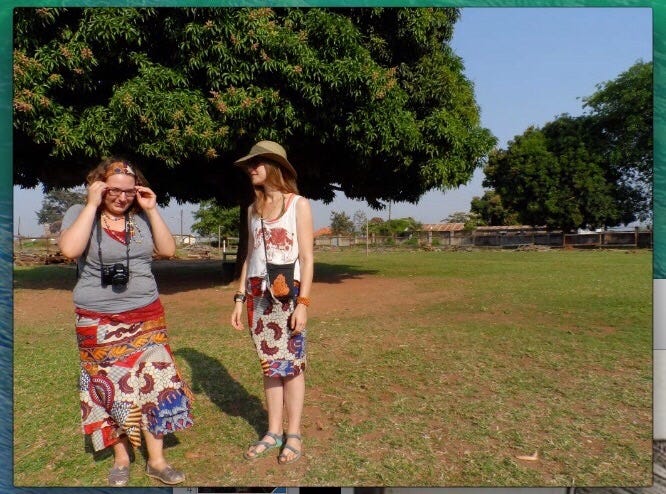
Thirteen years ago, in Gulu, Uganda, I was hit by a drunk driver while walking to catch a bus with two fellow Peace Corps Volunteers. It was my idea that they were there at all — they both lived out in the bush, and I’d suggested they stay with me so we could explore the capital before our in-service training began that weekend. I carried that for a long time.
One of them — Danielle, who her family called Ella, though we knew her as Gucci, a riff on her last name — was killed instantly. My other friend, Ellen, somehow summoned the clarity and courage to get help as I lay motionless on the roadside, unconscious, with a compound femur fracture and a torn-open knee. I have no memory of the accident itself — just flashes of laughter beforehand, the bright lights of Uchumi beside us, and then, hours later, awakening in a fog of pain and silence.
When I came to, I kept asking where Gucci was. I could hear Ellen nearby, but my vision was obscured — a bandage covered my face, torn with road rash. No one would answer.
Gucci and I were still becoming friends. We all were, really. We were barely six months into our service — Peace Corps Volunteers, there at the invitation of the Ugandan government, serving in ways that rarely get called service, in a place most people couldn't find on a map. We were just starting to get the hang of it. Just starting to get the hang of each other.
I was stationed in Gulu, then the second-largest city in Uganda, with intermittent electricity and the workaround resourcefulness that came with it. Gucci was posted further out, in a more rural corner of the north — relentlessly hot, wet season or dry. Before joining Peace Corps, she’d done AmeriCorps back home in Michigan and worked to reduce plastic water bottle use in college. So it was no small thing when she found herself in a place where buying bottled water wasn’t a consumer choice but a matter of survival. She was tormented by it. I boiled water in an electric kettle and stored it in reused bottles like the practical, salty scavenger I’ve always been. We hadn’t yet had the chance to MacGyver our filtration systems together — that’s how fresh into our service we were. We were still figuring out how to live there.
Bed bugs in her room while her housing was being sorted? No big deal. She dealt with them using a charcoal iron and moved on. Without assistance. She was there for all the right reasons — the kind of person who treated the people around her exactly as she wished to be treated, and held herself to a standard the rest of us could barely see from where we stood. She loved the natural world the way some people love a religion. She grieved its losses personally.
Nothing could get her down. That was the maddening, luminous thing about her.
I lost not only Gucci that night, but the version of her I was just beginning to discover. And I have spent thirteen years wondering what she would have become — to the world, and to me.
Today, I carry the marks of that moment in titanium nuts and bolts and deep internal aches. I carry them in scars, surgical and otherwise, in the way I walk, sit, stand, and sleep. I carry them in my face, literally. Red Ugandan soil is still embedded in my forehead. It settled there the moment my head hit the ground and it never left. Even now, well-meaning strangers lean in to tell me I've got makeup smudged on my face. I smile, but I don't explain anymore. It's not makeup. It's history. It's loss. It's survival.
For years I tried to measure healing by how much I could return to normal. But that framework collapsed early on. My body didn’t bounce back — it was reassembled. Recovery wasn’t a sprint or even a marathon. It became a terrain I now live within. Some days I move like a younger version of myself. Other days I limp through hours that ache with invisible weight.
For a long time, I hated my scars. Not just for how they looked — thick, uneven, raised — but for what they represented. The theft. The loss. The injustice of it all.
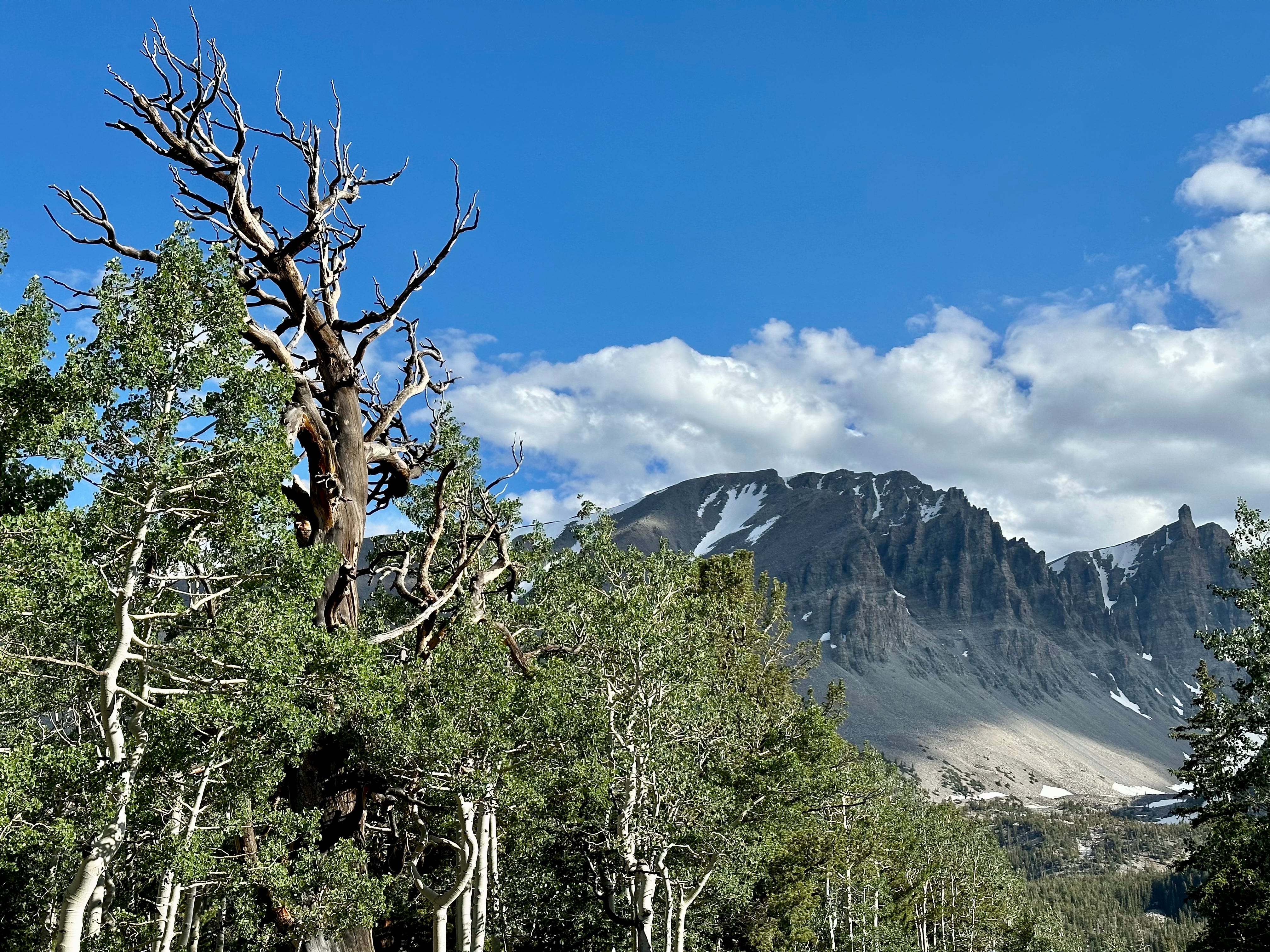
And then, in a high-elevation forest out West, I met a bristlecone pine.
Bristlecones are the oldest living trees on Earth — gnarled, contorted, weather-beaten by centuries of storms. They grow in places no tree should thrive: harsh winds, poor soils, bitter cold. But they do more than survive. They endure. Their bark splits. Their limbs twist. They don’t grow tall or straight. They grow stubborn. They grow wise.
I looked at that tree — part dead, part wildly alive — and for the first time, I saw my own body reflected back.
But here’s what I’ve come to understand, thirteen years on: I am not the wind. Gucci was the wind. She moved through everything — through hardship, through discomfort, through the suffocating bureaucracy of service in a place that tests you daily — and she bent nothing down. She bent things open. The bristlecone doesn’t grow the way it does despite the wind. It grows that way because of the wind. Every twist, every scar in the wood, every improbable survival — the wind authored it. The tree just had the stubbornness to stay.
I am still the same salty scavenger I ever was. But I feel her in the reasons I fight for the natural world she loved. That fight took me somewhere I never expected — to the halls of Congress, lobbying for Peace Corps veterans, for fire-adapted public lands, for the scrappy underdog causes that don’t always have someone in the room speaking for them. She didn’t make me someone new. She made me more insistently myself — and showed me what it looks like to mean it.
Every year on the anniversary, I go outside. I find somewhere I think she would have loved — a dune, a trail, a summit — and I spend time there. It’s the closest thing I have to a conversation with her.
I hope she’d be proud. Not of the scars, or the surviving, but of what I’ve tried to do with the years she didn’t get.
I’ll never be who I was before that day in Uganda. But that is no longer my goal. My goal is to grow, like the bristlecone, not in spite of what happened, but through it. To honor the scars as part of the architecture of my life. To remember Gucci — and Ellen’s bravery — not only in grief, but in witness. They were with me at the beginning of this road. They remain with me in every step.
Thirteen years on, my body is not pristine. But it is resilient. It’s honest. It remembers. And it keeps going.
The bristlecone is not beautiful despite its twists. It is beautiful because of them — because of everything the wind has done to it, and everything the wind has asked of it.
I no longer crave smoothness or erasure. I want that kind of beauty. The kind that holds history. The kind that outlasts the storm. The kind that carries, in every gnarled and stubborn inch, the shape of every wind that refused to let it be ordinary.