From Pillaging to Scavenging
On vultures, wheeled carts, and ecosystem integrity

We were walking home from dinner — one of those rare perfect spring evenings, the kind that feel borrowed, that you want to press between pages before the heat descends mid-week and makes you forget what comfortable felt like — when my partner watched me veer toward something left out on the sidewalk and said, almost without thinking: you’re a scavenger.
He meant it fondly. And he wasn’t wrong. What I’d spotted was a wheeled cart, the kind you use to haul groceries, in perfectly good shape. My left shoulder has been wrecked since getting hit by a van two years ago — I was in a bike lane, to be clear — and carrying bags home has become a slow grinding reminder of that particular bad day. Someone else’s discard was exactly what I needed. I took it home.
I’ve been shopping secondhand for most of my clothes and plenty of household items for years. I bike, walk, or take transit almost everywhere. I compost, shop the farmers market, eat less meat. My partner and I share 1,100 square feet with our dog. Is that enough? I genuinely don’t know if I’m at my limit or whether I’ve just convinced myself I am. But I keep returning to the question — what is enough space, enough stuff, enough? — because I don’t think we ask it seriously, at any scale.
You live the thing you’re arguing for, or you don’t really believe it.
That same evening I’d been turning over a chapter on sand — yes, sand — from Material World, the latest addition to my towering pile. Sand is the skeleton of the modern world: the concrete in our buildings, the asphalt under our tires, the silicon chips inside the device I’m typing this on and probably the one you’re reading it on. I’ve thought about downgrading to a flip phone, but honestly I’d rather practice self-control with my tracking device — pocket computer, if we’re being generous — and when it finally dies I’ll make the switch, praying to the recycle gods that Apple actually reuses its components rather than just gesturing at circularity. The point is: we are mining sand faster than rivers can replenish it. We are running out of the most abundant-seeming substance on earth, because we refuse to treat anything as finite until it’s almost gone. I’m already dreading the salt chapter, wondering what else I’ll feel compelled to cut. But sand cracked something loose: we are still, in almost every domain, in full pillage mode. Extract, consume, externalize the damage, extract more.
Scavengers understand something we have largely engineered out of our systems: nothing in a functioning ecosystem goes to waste. Vultures don’t just clean up after death — they close the loop that keeps the living world from collapsing under its own rot. Fungi aren’t merely decomposers; they are the circulatory system of the forest, redistributing what’s already there. After a wildfire tears through a landscape, nothing starts from zero. The system scavenges — charred wood becomes soil, snags become habitat, ash feeds the next generation of growth. Death, turned to life, by organisms patient enough to work with what exists. That’s not weakness. That’s ecosystem integrity.
And here’s what’s worth sitting with: even our cleaner alternatives carry an extraction debt we rarely account for honestly. Solar panels don’t burn to produce energy, but they burned a great deal to get built and installed. The EV battery doesn’t emit at the tailpipe, but it required mining operations that would make your stomach turn. The transition away from fossil fuels is real and necessary — and it still costs something to bring online. Scavenging isn’t just an ethical preference. In a world of finite materials, it is eventually the only option. We’re deciding whether to arrive there gracefully or catastrophically, and right now we are not choosing gracefully.
Nature closes its loops. We’ve been refusing to.
Taxes are due in three days, which has me thinking about the one act of fiscal resistance I’ve never quite been brave enough to try. A family member once found themselves in an unexpected position — a glitch in their payroll system meant taxes weren’t automatically withheld. The ending was anticlimactic: they noticed when filing, saw what was owed, and paid it. No political statement, no system disrupted. But I’ve thought about that story more than I probably should, because what it actually illustrates is how thoroughly the mechanism of extraction is baked in before we ever see the money. The withholding happens upstream, invisibly, automatically. Most of us never hold the full amount we earn. We scavenge what’s left after the system takes its cut — and then argue about the scraps.
Which brings me to where the scraps actually go. When I was working on Peace Corps policy reform — we eventually got the Sam Farr and Nick Castle Act passed in 2018 — the defense budget that year was $639 billion. Today it’s pushing $920 billion. The Peace Corps budget then: $430 million. The Peace Corps budget now: $430 million. They’re proposing to cut it to $410 million. Fewer than 1% of people have ever flown private, and yet here we are, flatlining the one program that actually sends Americans to sit with the rest of the world while the defense budget has nearly doubled. That’s not a resource problem. That’s a values problem dressed up as arithmetic. Meanwhile entire departments spend down to zero every fiscal year not because they need to, but because coming in under budget means losing that ground next year. Imagine rewarding agencies that came in under and redirected the savings toward something like, say, person-to-person diplomacy. Scavenge before you extract. Your elected official will take a meeting. Write the one-pager. Lobbyists shouldn’t be the only ones drafting the ask.
The same logic is failing in federal land policy — and has been for longer than the current alarm suggests. The Forest Service has been under the USDA since 1905, a founding decision that embedded a tension between conservation and extraction that was never resolved. The agency built its identity around fire suppression — Smokey Bear is literally their brand — and that identity calcified into a budget architecture that has spent a century prioritizing the wrong end of the problem. Wind drives fast fires. Wind doesn't care how many acres you've logged in its path. The communities in fire's path need hardened homes, defensible space, and evacuation routes — not the logging of fire-adapted ecosystems that may never see a flame before the next timber contract is written. So when this administration installs a timber industry executive as chief, closes 57 of 70 research stations, and scatters 5,000 employees across 15 state offices, it isn't disrupting an agency that hadn't figured it out. It's ensuring the agency that had can never act on it. The Nature Conservancy alone has received over half a billion dollars in USDA grants. The big green groups have their own incumbency to protect. The money follows the incumbency, not the evidence. That's not a new problem. That's the problem.
And yet here we are, doing what we can with what we’ve got.
We’re trying to compost our way out of a system designed to pillage.
What if the frame instead was: scavenge first. At every level — personal, local, federal. Before any new extraction of money, of sand, of political capital, demonstrate that you’ve exhausted what’s already in the system. Redirect before you dig. Close the loop before you open a new one.
A colleague put it better than I can in a recent op-ed. What we need, they wrote, is courageous restraint — to let nature’s choices prevail over our own.
I picked something up off the sidewalk last night. It was a good find.
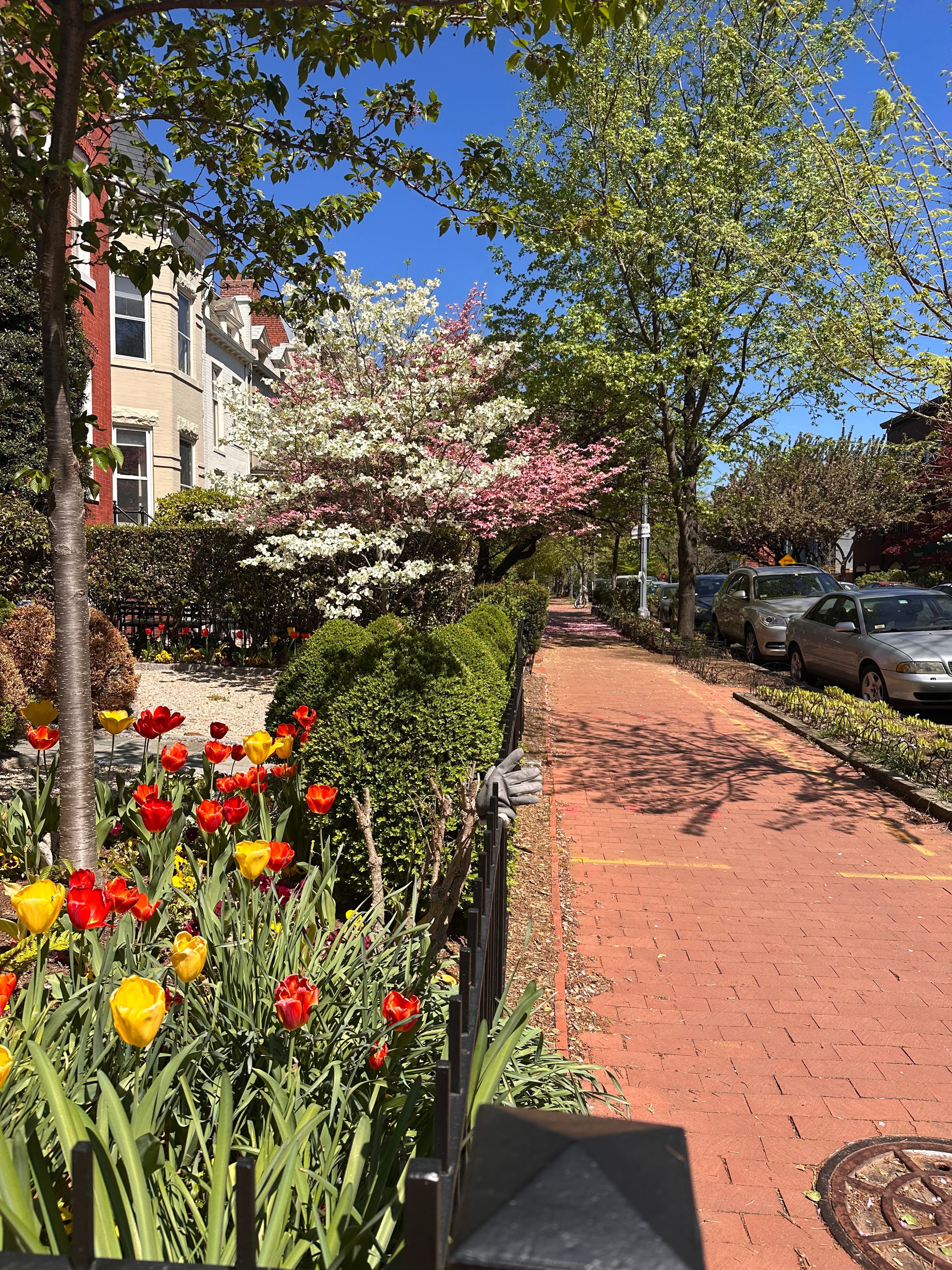
Courageous restraint—taking it for a test drive today, thank you!
Love this take!